Pillar 01Area of development
Soft Actuation
Developing compliant artificial muscle systems that generate movement through soft mechanical structures.
- Pneumatic artificial muscles
- Soft finger architectures
- Compliant by construction
Intelligent Soft Actuation
Developing intelligent artificial muscle technology for more natural assisted movement — starting with rehabilitation.
UK-based | Soft Robotics | Rehabilitation Technology
Traditional robotic movement often depends on rigid motors, cables, pulleys and mechanical joints.
Conventional — rigid transmission
Concept — continuous soft actuator
Conceptual architecture — requires validation
Exploring soft actuators that combine compliant movement, sensing and intelligent control.
How a McKibben-type muscle works
An elastomer tube sits inside a sleeve of braided, inextensible fibres. Pressurising the tube makes it expand radially; because the fibres cannot stretch, the braid angle increases and the actuator shortens — pulling along its axis, much like a biological muscle.
Why control is the hard part
Soft pneumatic actuators are non-linear: force depends on pressure, length and velocity, and the response shows hysteresis — it differs between inflation and deflation. We are exploring predictive, model-based control that anticipates this behaviour rather than only reacting to error.
01 — Neutral
An elastomer bladder sits inside a braided sleeve. At rest the actuator is soft, flexible and naturally compliant.
Interactive concept — illustrative, not measured performance
Pillar 01Area of development
Developing compliant artificial muscle systems that generate movement through soft mechanical structures.
Pillar 02Area of development
Exploring models that anticipate and compensate for the non-linear behaviour of soft actuators.
Intent
sEMG
Predictive controller
model-based
Soft actuator
non-linear
Sensing
force · pressure
Pillar 03Area of development
Investigating multi-material structures and graded stiffness to create more integrated robotic components.
How the pillars relate
Soft actuators need control that understands their behaviour; integrated manufacturing aims to build the sensing and structure in from the start.
Soft actuation
Intelligent manufacturing
Predictive control
One
system
Our proposed soft-robotic rehabilitation glove aims to translate movement intent into controlled physical assistance.
Regulatory status
The glove is a proposed medical application in development. Any classification — for example a provisional reading of EU MDR Rule 9 and a potential Class IIa route — depends on the final intended purpose and a formal regulatory assessment. UK, EU and US pathways are separate and not assumed to be equivalent. No approvals are claimed.
Intended model
The intended commercial model is B2B2C, initially through physiotherapy clinics. Clinical efficacy has not yet been demonstrated; validation of assisted movement is part of the planned development stage.
Intent → assistance → force regulated
In development — conceptual device visualisation. Not an approved medical device.
Step 01 / 05 — The complete system
A powered soft-robotic glove: soft actuation, intent sensing, force feedback and on-device control, with a separable remote therapy console.
The complete system
A powered soft-robotic glove: soft actuation, intent sensing, force feedback and on-device control, with a separable remote therapy console.
Select a functional area to learn more.
The envisioned ecosystem links the powered glove, its on-device control, and a separable remote therapy console for clinicians.
01 · Patient
The wearer’s intent, sensed through sEMG, is met with controlled soft assistance from the glove.
02 · Device
Safety-critical actuation and control are intended to remain on the physical device — independent of internet latency.
03 · Therapist-facing remote session software
Architecture principle — the cloud therapy layer is separable. It carries session plans and summaries; it does not control safety-critical motion, which stays with the device’s local control loop.
Concept interface with demo data — not deployed software
07From rehabilitation to robotics
It begins with the glove's soft actuation system.
Potential applications · long-term direction
Conceptual robotic finger — a long-term engineering direction, not a demonstrated product
Near term
Proof-of-concept finger in CAD; bench rig under construction.
Next development stage
Regulatory pathway to be assessed; no approvals are claimed.
Long-term ambition
An ambition, not a commitment of timing or outcome.
Instead of headline numbers, here is what we are working to establish — and what will be measured.
Current stage
Early-stage engineering development. Performance validation is ongoing.
Proof-of-concept finger
In CAD
Bench rig
Under construction
Performance validation
Ongoing
01 · Validation priority
Data pendingEvaluate actuator force-to-weight and movement characteristics against relevant alternatives.
Illustrative data visualisation — not experimental results
02 · Validation priority
Data pendingInvestigate repeated-cycle durability, material behaviour and component integration.
Illustrative data visualisation — not experimental results
03 · Validation priority
Data pendingEvaluate predictive control performance under actuator non-linearity, hysteresis and changing operating conditions.
Illustrative data visualisation — not experimental results
We believe the next generation of assistive and robotic systems will need technologies that move with greater adaptability and control.
MYOCURVE is working toward that future through soft actuation, intelligent sensing and engineering-led development.
Biomedical engineering and pharmaceutical science, brought together to build intelligent soft actuation for rehabilitation.

01
Co-founder & CEO
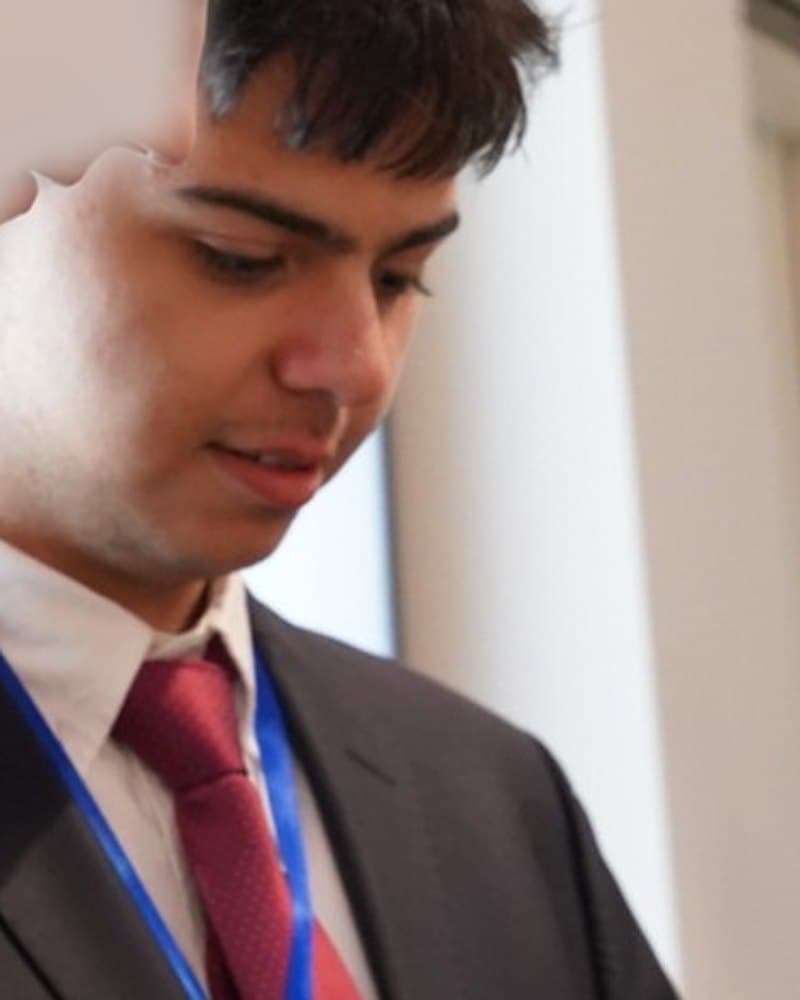
Biomedical engineer completing his MEng at University College London, where he ranks in the top 10% of his cohort, and a Research Assistant in Prof Ziyan Guo's group at Charles Bell House, UCL.
Selected highlights
Özgür Aydın is a biomedical engineer and the Co-founder and CEO of MYOCURVE Ltd, which develops soft robotic actuators and intelligent control software for hand rehabilitation. He is completing his MEng in Biomedical Engineering at University College London, where he ranks in the top 10% of his cohort, and is a Research Assistant in Prof Ziyan Guo's group at Charles Bell House, UCL. MYOCURVE is currently in the UCL Venture Builder programme at BaseKX.
His research spans medical imaging, computational physics and biofabrication. With Prof Ben Cox (UCL Medical Physics & Biomedical Engineering), he built a k-space pseudospectral acoustic solver and analysed its numerical stability — work that feeds into the k-Wave simulation ecosystem used in ultrasound and photoacoustic imaging research. With Prof Adrien Desjardins (UCL), he is researching a new printable material for the CELLINK BIO X bioprinter, developing both the deposition process and custom G-code toolpaths; a manuscript is in preparation.
Özgür also works with Danny Chen, founder of Jane Snow Medical, on patient-specific 3D-printed anatomical models. Through this collaboration he takes part in the London Institute for Healthcare Engineering Accelerator and the Cambridge Accelerator at Cambridge Judge Business School.
MYOCURVE won the Speed Build 2026 hackathon, securing a travel grant and a funded place on a San Francisco venture programme in summer 2027. Özgür also placed Top 5 at the HealthInClimateAI London hackathon, and has since set up a hackathon series in partnership with the Kingston University Entrepreneurs Society, the UCL Entrepreneurship Society, the UCL Surgery & Interventional Science Society and a startup platform founded by Alexandra Tran.
He was elected Biomedical Engineering Course Representative, shortlisted for UCL Academic Representative of the Year, and is part of the UCL Bicentenary Award cohort.
02
Co-founder
Pharmaceutical Science student at Kingston University London, bringing a background in scientific research, entrepreneurship and technology-driven innovation.
Selected highlights
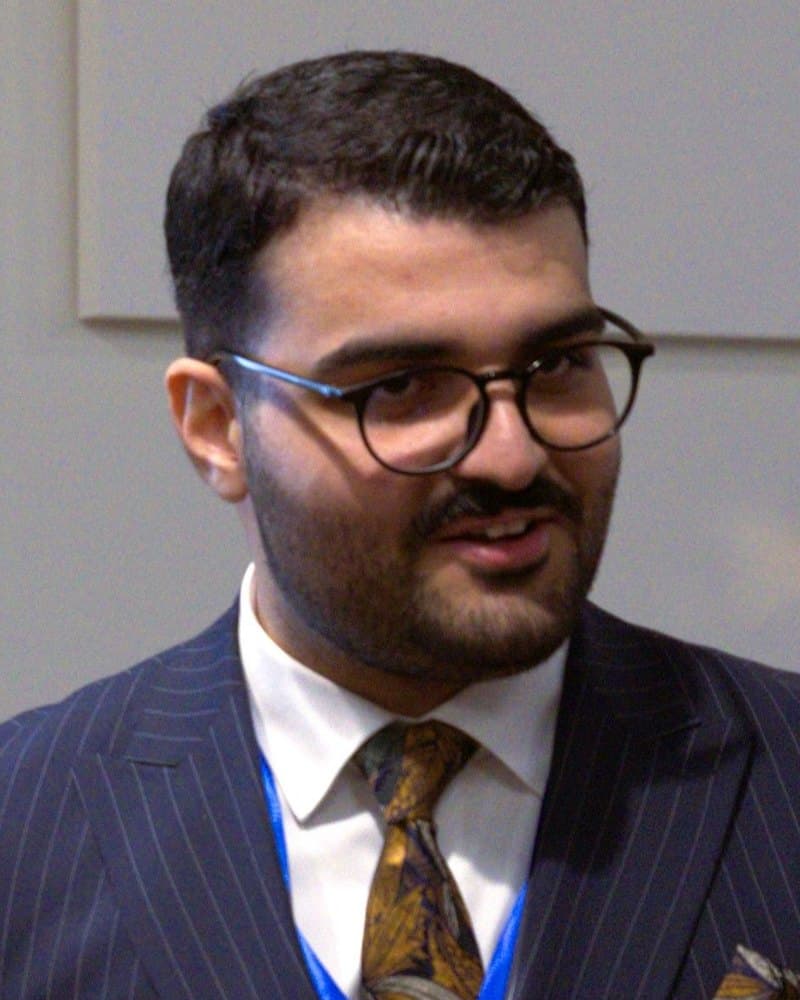
Mahan Rezapour is a Pharmaceutical Science student at Kingston University London, with a background in scientific research, entrepreneurship, and technology-driven innovation.
He is the Founder and President of the Kingston University Entrepreneurs Society, recognised with the Fastest Rising Society Award 2026, where he has led entrepreneurial initiatives, industry collaborations, and events connecting founders, researchers, and professionals.
His research experience includes computational chemistry, cheminformatics, and data-driven scientific projects. Combining his scientific background with experience in community building, partnerships, and business development, Mahan brings an interdisciplinary perspective to MYOCURVE's mission of advancing soft robotics and rehabilitation technology.
Be the first to hear about MYOCURVE’s progress as we develop intelligent soft actuation for rehabilitation and beyond.
Form not loading? Open the waiting-list form.
Let’s engineer what’s next.
Interested in research, clinical or robotics collaboration, or in investing?